


The fishing industry in Alaska is not what I expected in many ways, but in others it is exactly what I expected. There are a few types of people who go for this type of work. In the canneries especially you’ll see a lot of migrant workers taking advantage of opportunities that they couldn’t get back home, working their asses off to send money back to their families. Then you have the felons and criminals who found out this is one of the highest paid jobs you could get without a background check. And finally you have the people who’s wanderlust and sense of adventure, mixed with a lack of financial solvency, led them to think working in the fishing industry is a good way to see Alaska.
I could relate with some parts of all of these groups. I wasn’t there because I loved fish guts or thought the cannery floor was my calling. I was there because I needed the money, wanted the adventure, and didn’t mind disappearing into the grind for a while. Everyone shows up with their own baggage. Some literal, some not. But by the second week, none of that matters. The slime line levels everyone.
Over the past summer, I worked a little piece of each part of this industry, from my time in the cannery in Naknek, to my brief stint on a drift gillnetter in Bristol Bay, to finishing up the season on a tender out of Sand Point. Finding a job can be a pain in the ass in some ways. But if you show up, there is no easier place in the world to get a job. This is my little how-to guide.
Where you will be going
Obviously somewhere in Alaska, but not just anywhere. The map gives you a sense of it, courtesy of alaskaseafoodprocessors.com which is coincidentally a great place to look for cannery work. Red stars marking all the major cannery towns scattered from the Aleutian chain up through Bristol Bay and across Southeast Alaska.
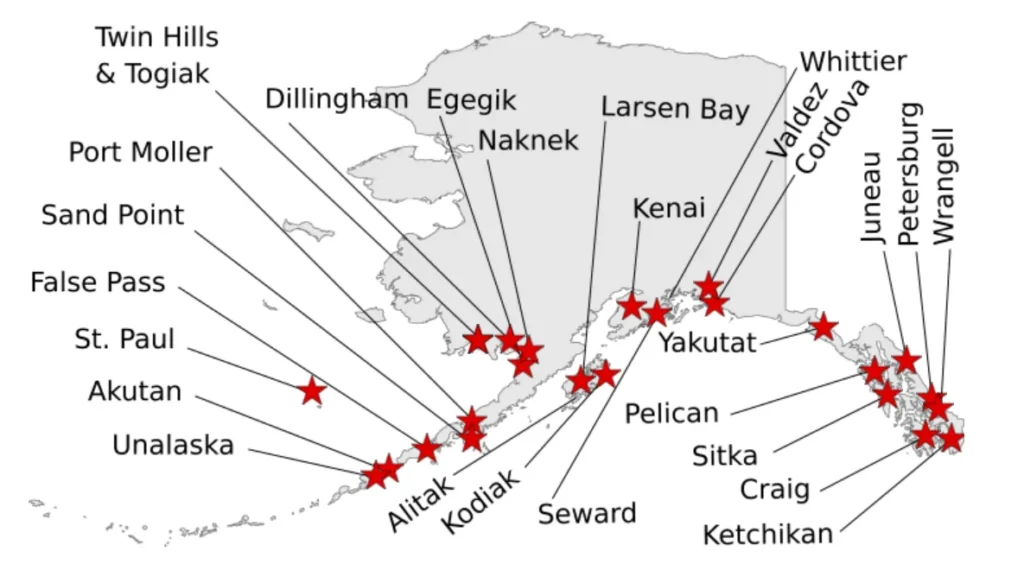
If you’re in the canneries, you’ll probably be flying into one of these names you’ve never said out loud before, and spending the summer gutting salmon until you dream about them. If you’re on a boat, gillnetter, seiner, longliner, tender, whatever, you’ll be working just offshore from these same towns, delivering back into the plants.
Some of them are beautiful, some are grim, but all of them are isolated. No big cities, no nightlife, just fish and the small communities that live off them. You’re out there for real. That’s part of the deal: when you say yes to the job, you’re saying yes to being shipped off to one of these dots on the map, and disappearing for a season.
As for the cost, most companies usually pay your way to get there. The processing plant I worked for paid for round trip tickets from Seattle, with a layover in Anchorage, where I switched to a tiny prop plane. If I got fired or quit, they would have made me pay my own way back, which was pricey (like $1000). When I got my tender job, my captain also paid for my way from Anchorage to the little town of False Pass, way out in the islands, and I saw on the confirmation that he paid close to $1000 for that one way flight. In short: don’t fuck it up or you will leave with less than you came with.
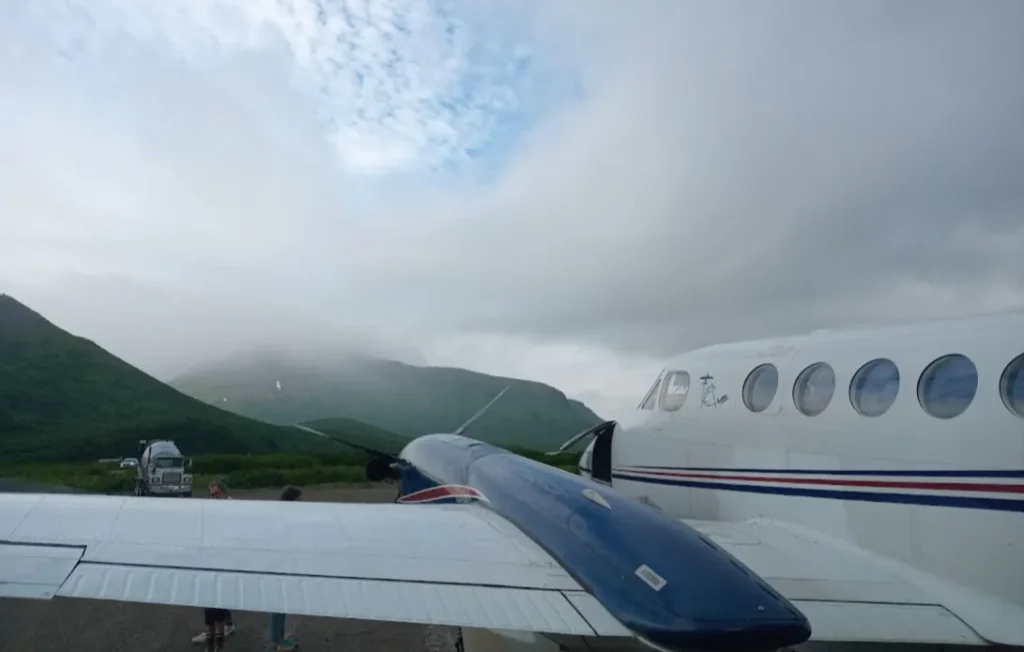
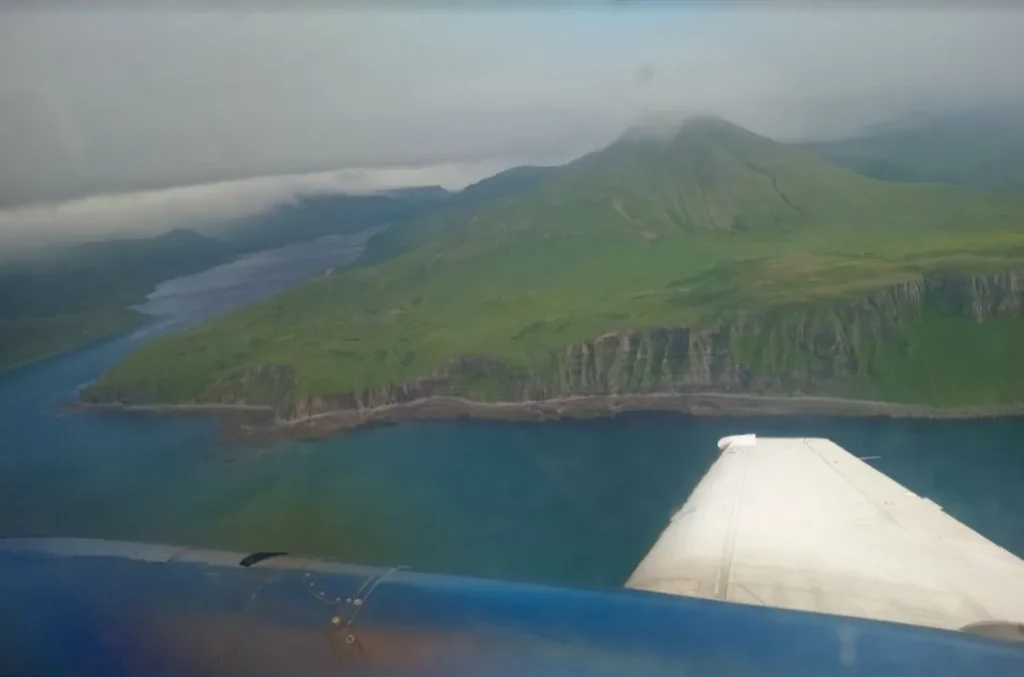
Depending on the size of the town, you’ll probably get to fly in on a pretty small plane, which is an interesting experience.


Types of jobs
There are a bunch of different ways you can get into the industry. Canneries and boats have offices, kitchens, and all other sorts of support staff that don’t work directly with fish. If you never want to get your hands slimy while you’re there, you still have plenty of options. I stuck with the fish. In my experience, these are the kinds of jobs you’ll see:
Cannery / processing plant
This is where I started, and honestly, it sucked. The hourly rate was garbage. You’re looking at something like $18 an hour, or $25 with overtime. No offense to my homies coming in from Mexico who are looking at this in relation to a Mexican salary. That’s different. But either way, you work so much that it actually makes sense and gets you some decent money. Sixteen-hour days, seven days a week, no life outside the slime line. For example, I made almost $4,000 in just a couple weeks. If you land at the right plant and grind out a full season, you can expect anywhere from $5–8K in a month. Miserable but steady.
Gillnetters
These are small boats, tiny crews, and a whole lot of hard work. You gotta be quick picking fish out of the nets and keep up with nonstop sets. But the money is no joke. The deckhand I worked with walked away after six weeks with around $20,000. That’s the tradeoff. Brutal grind, serious cash. I was only on one of these for a week. Came out with about $800, and my captain paid for my ticket back to Anchorage. So it wasn’t a total waste of time.
Seiners
I never worked one, but run the math and it looks like some serious money. A full share is about 10%, a half share is 5%. You’re pulling in hundreds of thousands of pounds of salmon. If a boat does, say, 500,000 pounds, that’s some serious money. Depends on the crew, the skipper, and the season. But it adds up fast. Maybe I will try to get on one of these next season so I can report some real numbers.
Tenders
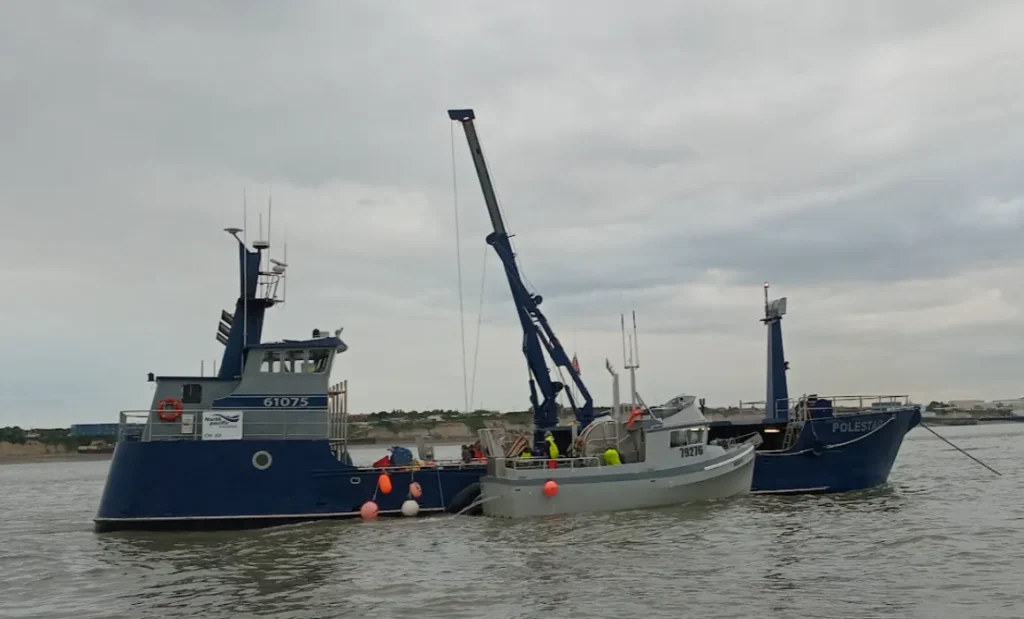
Easiest out of the boats, in my opinion. This is what I did for the last month of the season. Tenders don’t actually fis. They collect from the smaller boats and haul the catch to the processors. The work itself isn’t backbreaking, but you’re always on call. No real sleep schedule. My crew were assholes, so that sucked. Then again, I was pretty shit at it, so it was probably called for. But money-wise it was worth it. You can still make $200+ a day. Lots of downtime, lots of waiting, but you have to be ready to go at any time.
How boats pay out
I should probably mention the way the pay works on boats is different from any other job. On the boats it all comes down to shares. A full share usually means 10% of the gross catch, and a half share is about 5%. If you’re green, you’re probably starting at a half. Gross sounds good, but before anyone sees money, the skipper pulls out expenses. Fuel, ice, food, gear repairs, port fees. Sometimes food comes out of crew pay too, depending on the captain. Once all that is shaved off, what’s left is the pot that gets split between the crew. It’s a gamble. Strong run, high fish prices, good skipper, you can make bank. Bad run, busted gear, bad weather, you’re shit out of luck.
During the season, crew can usually ask the skipper for a draw, which is a small advance against your eventual settlement. Could be $100 to $500 here and there, just enough for snacks, cigarettes, or a bar night in port. Don’t expect much more. The real payday comes at the end of the season when the cannery or fish buyer cuts the check to the skipper. The skipper subtracts expenses, does the math on shares, and pays out crew. Sometimes this happens the day you tie up, sometimes weeks later. If you work in a cannery, obviously you don’t have to deal with this.
Where to look for cannery jobs
Canneries will usually start posting jobs a few months before the season, and continue hunting for more bodies during the season, as there is often high turnover. The big players are Trident, Alaska General Seafoods, OBI, Silverbay Seafoods, and a few others sprinkled across the islands. Google them and apply on their websites. If you get impatient, look up their plant locations and call them directly.
This site where I got the map I showed above is a sweet resource I only stumbled across after I found a job.
You’ll see some Alaska seafood jobs pop up on sites like Indeed or Glassdoor, but honestly, they’re hit-or-miss. A lot of the listings are outdated, incomplete, or just redirect you back to the company’s own site anyway. If you’re already browsing company pages directly, you’re ahead of the game.
Another popular suggestion I saw was AlaskaJobFinder. But it’s a paid site, and while some people swear by it, I never used it. Everything you need is out there free if you know where to look.
Where to find work on a fishing boat
Everything I read online told me to walk the docks, usually without any further explanation. I tried that and ended up like Otis Redding sittin on the dock of the bay type shit. If you’re an introvert like me, you’re probably not trying to walk the docks, hop on some stranger’s boat, and go hunting down the captain to ask for work. And you’re definitely not stoked about hanging out in some salty bar in a fishing town, drinking with the locals until you happen to meet the right skipper. If you are, you will find work even faster (and probably on a more fun boat with a crew that likes to keep their party supplies handy).
What worked for me was Facebook groups. There are a ton of them. Just search stuff like Bristol Bay Jobs or Alaska Commercial Fishing Jobs. I made a post with my background and got a few calls out of it. Captains check those boards constantly during the season when they need to replace crew fast. It’s a way to throw your hat in the ring without having to cold-approach people face-to-face.
I also tried calling the fleet offices, the ones that run tenders for the canneries. Those offices keep lists of available crew and sometimes place people on boats when skippers call in short-handed. It’s not a sure thing, but it’s worth a shot if you strike out online.
Anyway, the trick is to be in the right place at the right time. With this field, that’s pretty easy to know: anywhere in Alaska between May and September. Say yes and show up when you get a call, and you’ll stack money fast, see parts of Alaska most tourists never even imagine, and walk away with stories you can’t buy.

Leave a Reply