


Alaska – June to July 2025
I always loved salmon. Looking back on my youth, I can recall the first time the salmon came to me in a dream. The seed was planted, but like a stomache ending in a long and satisfying fart, it took a long time to finally come out.
The salmon called to me all those years ago, but I was not able to answer.
Until now.
Faced with a dwindling bank account after years of roaming Latin America, endless partying, and plenty of bad financial decisions, I needed an answer. Living in Medellin, Colombia with an ever decreasing stash of dollars to my name, I stumbled across the idea of working in Alaska’s fishing industry.
I’d never worked a backbreaking, manual labor job in my life. The idea of suddenly diving headfirst into something like this felt surreal. But maybe that’s why I didn’t hesitate. Or maybe it was just that in today’s market, actually hearing back from any job felt like a miracle. Either way, when the cannery said yes, I packed my bags.
While I wanted to work on a boat on the high sea, fighting the waves, I didn’t have any foot in the door to the industry. So, this job at the cannery was just right. They’d cover my flights, feed me, and pay me enough to keep the dream alive. And once I got to Alaska, I’d be in striking distance of a fishing boat anyway.
Arriving in Naknek, Alaska
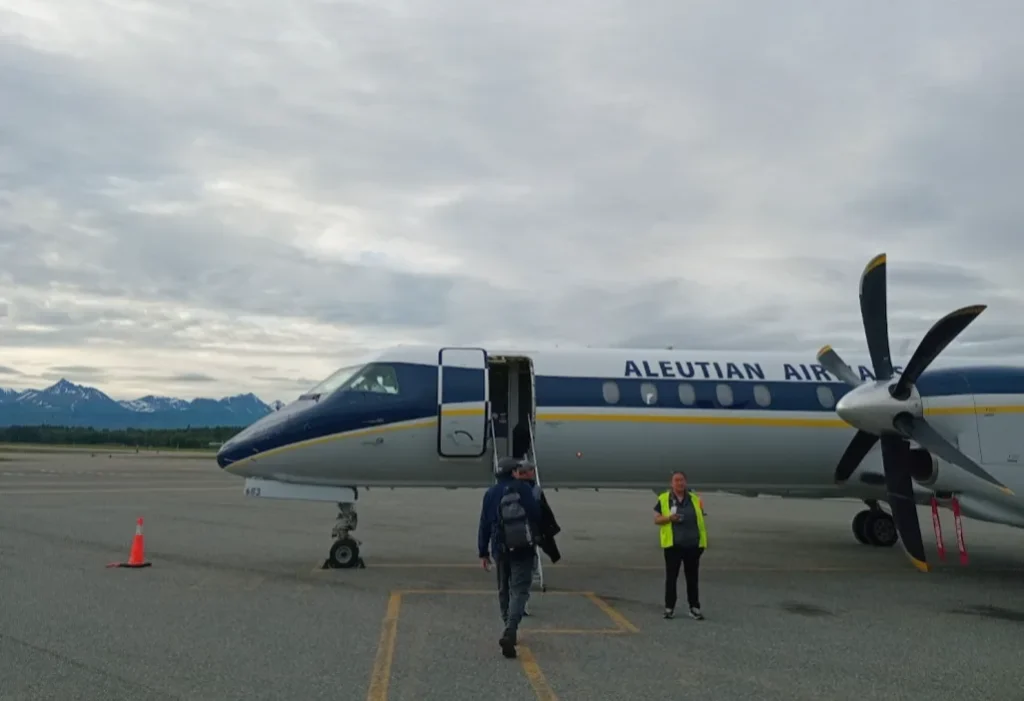
I spent over a month making my way from Colombia, up through Mexico, and onto Seattle. That’s a story full of misadventures for another post. My company was paying only for my flight from Seattle to Anchorage, and from Anchorage on to Naknek, something that would have cost me in the realm of $1,500. I sure was lucky.
On the way into Naknek, I got to enjoy being on the smallest plane I’d ever been on. The flight even came with a free half can of diet coke, split with my neighbor across the aisle. Not that I would complain about any amount of diet coke, I just think a flight of that caliber should have been able to spare a full can per passenger. But I digress.
The flight was beautiful, but Naknek itself is one of the ugliest places I’ve been to. Stepping off the plane onto the gravel runway and being herded onto the bus along with everyone else who was there for the same purpose gave a sense of camraderie. But the swarming mosquitoes quickly drew away any joy that might have been brewing in my heart about being there.
The bus drove us up the singular road running through the town, past about four or five other processing plants, before arriving at the cannery that I had elected to work at. With no signal or WiFi, the isolation had begun. The grind was right around the corner.
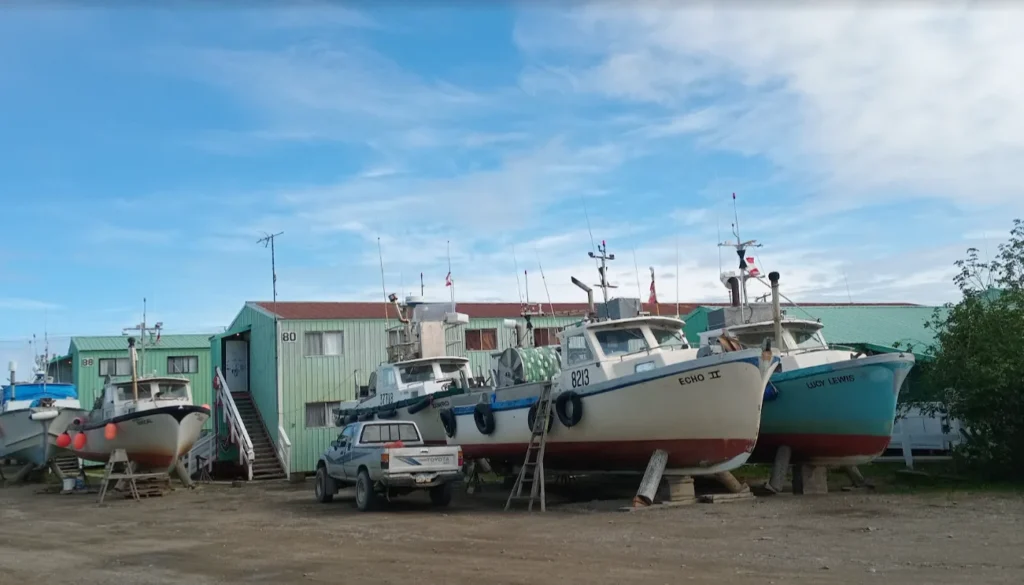
The camp was rather pleasant. The air was crisp and fresh. And there was an overall feeling of being “way the hell out here.” Fishing boats were perched on stands throughout the yard, with about a dozen bunkhouses nestled between them. Old vehicles were haphazardly parked everywhere. The cannery was wedged at the between the docks and a steep hill on the other side.
The first day involved a brief orientation, followed by everyone getting settled in and mingling. That day was boring. But I met a few interesting people and came to know my bunkmates. Like myself, they were people who had never set foot in Alaska and didn’t have a clue what they were getting into.
On the job
A 5 minute walk from the bunkhouse, at the foot of the hill next to the water, was the processing plant. It was separated into a couple of different buildings: the cannery, the warehouse, and the freezer. Throughout my time there, I would get to know the cannery more than the other components, as I was assigned to work on the slime line.
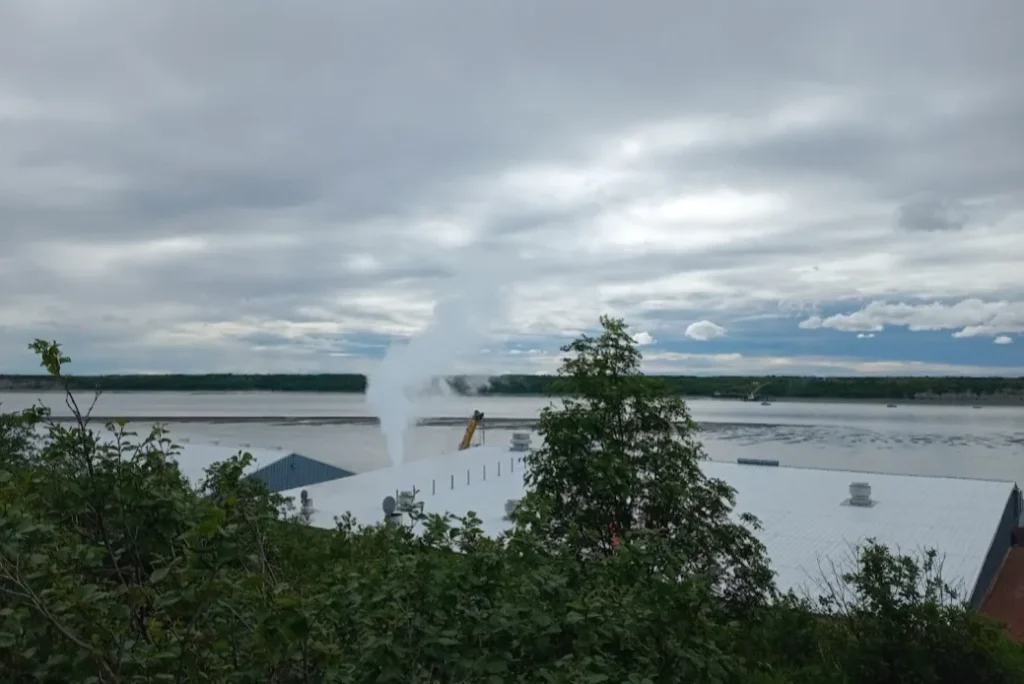
When fish get unloaded from the tender boat, they are sucked through a massive vacuum system to a holding tank where they are then fed into the cannery. Each fish makes its way within minutes throughout the facility. From being cleaned, gutted, and filleted, to ultimately becoming finely chopped pieces that end up in a can. The finer cuts are frozen as whole fillets. The whole process makes a snack out of the unprocessed fish in around five minutes. It really is impressive.
The work was miserable. Maybe I’m just a pussy. But working for 16 hours straight after never having had a real job in my life was a reality check. My feet hurt. My wrists hurt. Everything hurt. The work itself was repetitive, cold, and never seemed to end. It was a nonstop assault of blood mist and fish eyes staring blankly as they slid past, and gloves that never felt quite protective enough.
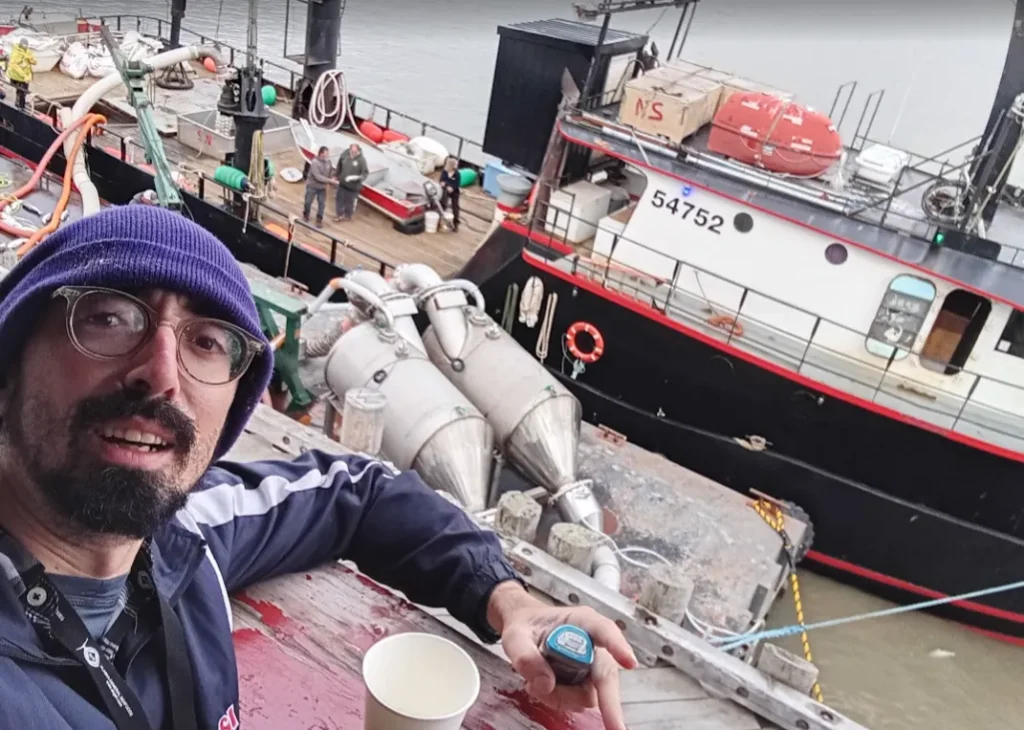
Sprinkled in between the long hours of standing in one spot, I got to take a few five minute breaks, where I was able to sit down and enjoy a smoke and a coffee. They would have been ten minute breaks, but you were required to remove all of your rain gear before going on break, and put it all back on before getting back to work.
Eating
The best part of the day was no doubt the meal breaks. Sure, everything else about the job sucked, but the food was top notch. Perhaps the only thing keeping me looking forward. With the workload, massive amounts of food were very necessary.
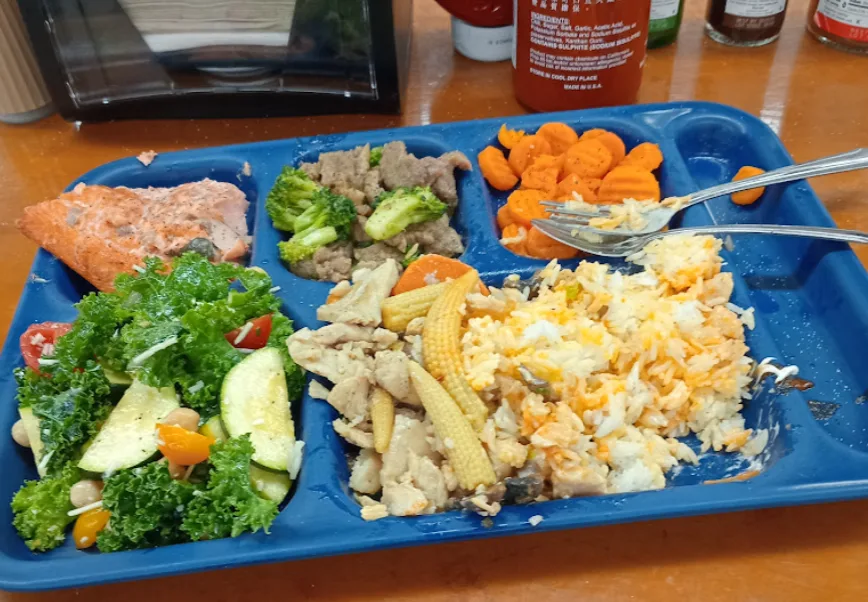
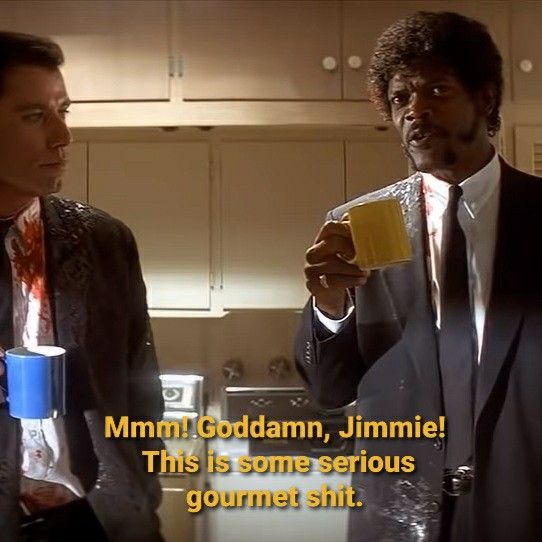
There was never a repeat meal choice, save for one thing: salmon. Salmon for lunch. And salmon for dinner. Sometime even salmon for breakfast. The drink selection wasn’t too bad either. The coffee was “some serious gourmet shit” as Vincent would put it.
In the end, did it even matter?
There was plenty of time to think. Hours of mindless repetition led to countless daydreams and remeniscing over better times when I wasn’t freezing and covered in slime. Outside of work, there was no room for anything else. I had just enough time to get out of my dirty clothes, maybe grab a shower, and hit the sac before it was time to wake up and do it again.
But that’s the cannery for you. I made maybe $3,200 before getting news that the season was ending early, and they were sending everyone home. It was decent money for two weeks, but I felt like I put myself through much more than that. Once the deal was officially done and they handed me my ticket home, it all felt rather empty. I was just warming up to it before being cut off.
The next day I spent frantically looking for a job on a fishing boat out of Naknek, and luckily, I found one. Maybe I’ll get to that story next.
Would I recommend working for a fish processor in Alaska? Absolutely. It wasn’t so bad. Would I go back? I really hope I will have a better opportunity next summer, but if I don’t, then I would not hesitate to do it again.
Leave a Reply