


July 2025 – Naknek, Alaska
Read the previous chapter to this story here.
After finishing up at the cannery in Naknek on Saturday, I put out a post on the local Facebook jobs group, and by Monday morning I had three calls from different boats looking to hire me.
The first asked me to come down to the dock and interview in person. After walking two hours from the cannery to their little boat docked at the opposite end of the village, they were quick to tell me they actually did not want to hire me, but that they wanted someone with fishing experience instead. The pure frustration from this meeting that could have been a phone call (no no these fuckers asked about my experience already on the phone they just needed to witness my suffering firsthand). Anyway, this stoked the fire to hurry up and wait for the second phone call.
The second call is the job I ended up taking. Captain Christian was his name, and he asked me one question (what is your work experience), before telling me I got the job and to come aboard right away. I didn’t ask any questions, like what was the pay or how long we would be out, but instead grabbed my bags and started heading towards the docks.
On the way there, I got another call, from a captain who promised me 7% share, and telling me how it would be more than I could ever hope for as a greenhorn. I rejected him as I was already heading toward my first option, but the offer lingered, and I hoped that I wasn’t making the wrong choice.
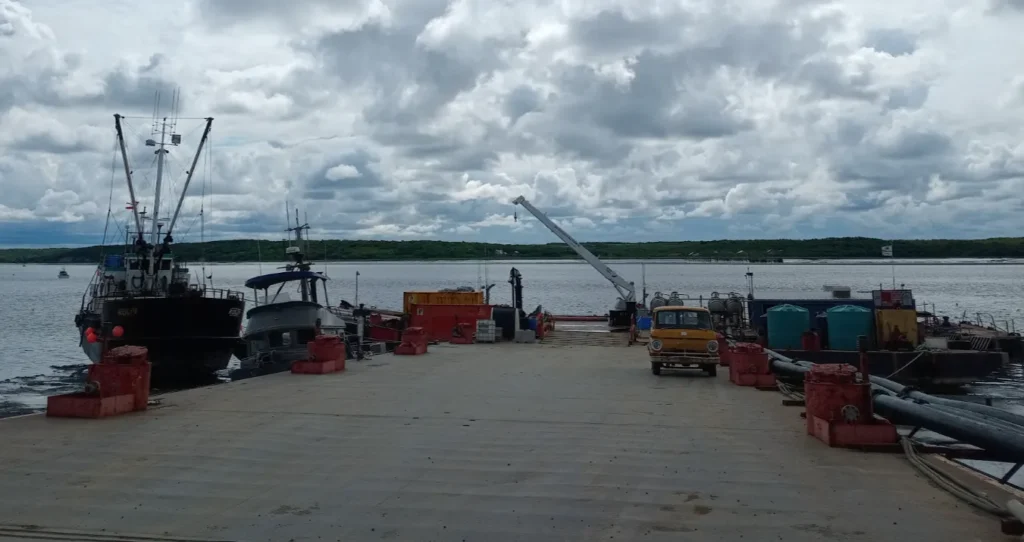
The boat
After meeting Captain Christian (a devout Christian man, living up to his name), and the other deckhand, we immediately cast off from the dock and made way toward open water.
I ended up getting that 7% that I was told was so rare, here.
Our vessel was the Ghostrider, and she was definitely one of the boats of all time. We got engine trouble fifteen minutes into the journey, and had to limp back to the docks to call up the marine mechanic. The next five hours were spent getting to tear up the floor to access the engine and stand around listening to the angriest sounding, most profanity happy fellow cuss his heart out at all of us and the boat until it was fixed, no doubt sped up significantly by his loving words towards our boat.
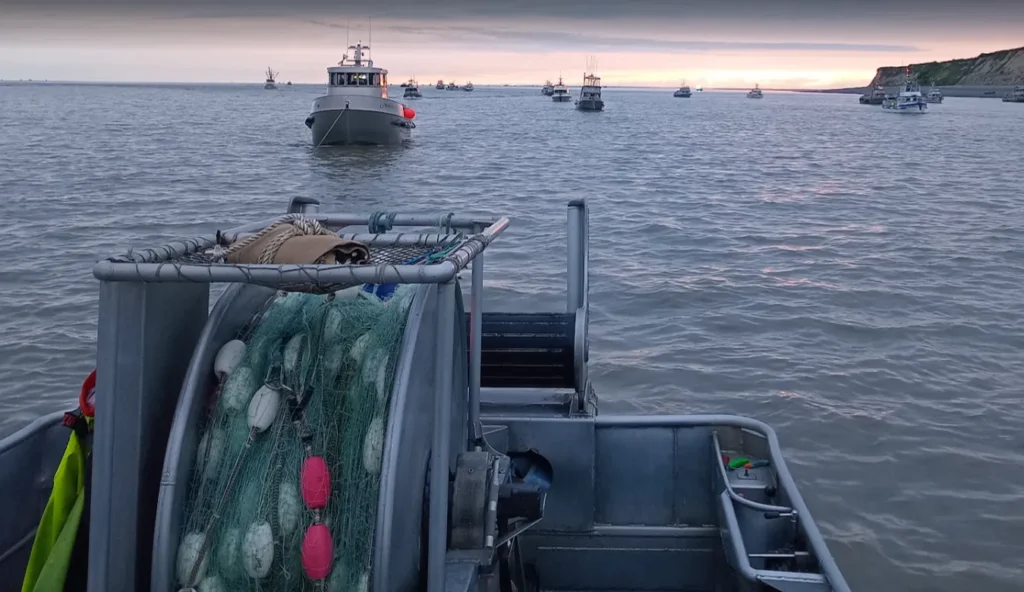
What is a gillnetter anyway? Well, its all about the gills and the net. The net is wrapped around a drum in the middle of the boat. Cast out over the back, the boat moves, the net remains in the same place in the water. Once all the net is let out, the boat drifts for a while with the net. The salmon, in all their glory, swim en masse into this net, and get caught up by their gills, unable to break free.
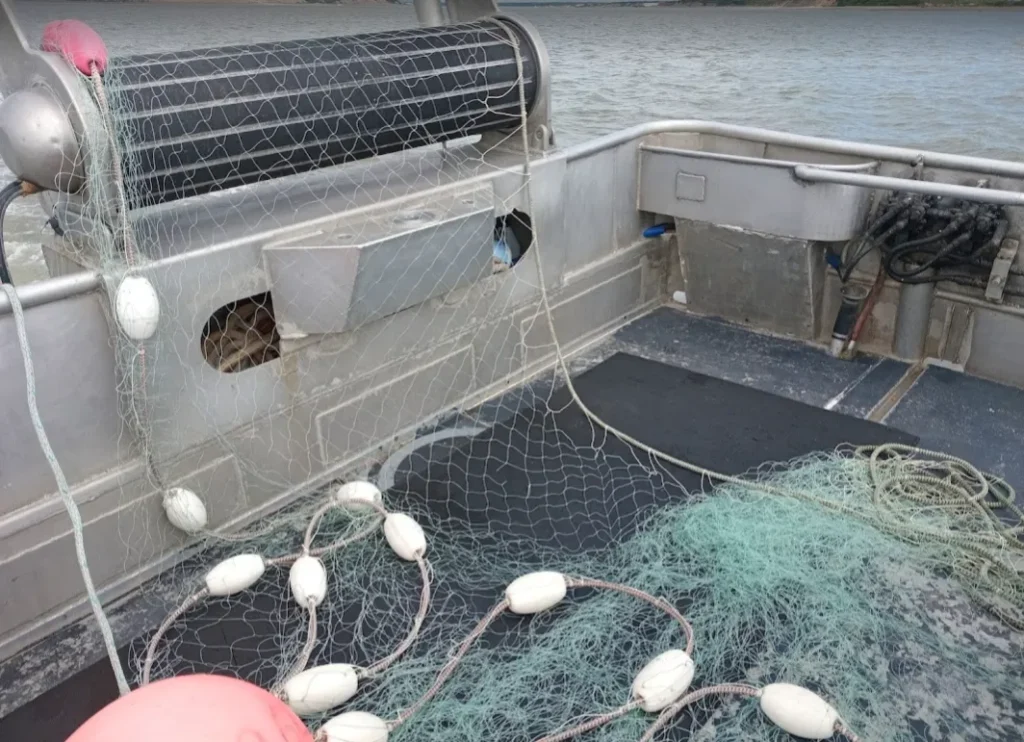
Once it looked like there were enough fish in the net, we would start hauling it in. You had to pick out each fish individually and kick it into the hold. It was a massive pain in the ass. Blake, the other deckhand, told me he enjoyed giving them a solid punch in the face to really feel like he was killing them personally. So thats how a pescatarian beats his meat, I thought.
Celebrating 100,000 pounds of salmon, then winding down to nothing
The first night aboard was the celebratory dinner for catching 100,000 pounds. None of which I had any part in catching. I was only coming aboard the last few days of the season, and we maybe caught 2500 pounds on my first day. At $1 a pound, these two guys would have plenty of reason to celebrate. My 7% of that one day’s catch though, was still good enough for me to be in a good mood.
Over the next few days I would get familiar with the process more and more, and find that there was plenty of downtime. Since the peak of the season was over, each day’s catch was less than the previous. At least I got to enjoy being on the boat, and I was happily not getting seasick.
Since there was no internet, and I had no books or entertainment, there was nothing when we weren’t working, so we just went right to sleep. Sleeping on the boat was wonderful. The waves rocked me to sleep, and I was more than able to rise at the crack of dawn to get back to work.

Christian was an amicable guy. I never heard him speak in barely above a whisper. He gave out orders mainly by giving a thumbs up or down, or pointing, or doing the little throat cutting gesture that people do. Him and Blake were able to get the job down without much needing to be said anyway. They were in sync.
Due to drama between them that I never learned, he quit shortly after my arrival, and we had to call the season a little earlier than hoped.
This guy wanting to leave early meant that my earnings would be cut short. But it was understandable, since our catches were dwindling day after day, the longer he stayed, the less his average day rate would be.
Plus, there was no way just me and Christian could stay out to keep fishing, since I barely knew what I was doing, even though I floated the idea to him.
Loading up the boat and moving on
The process for putting away the boat was interesting. We pulled up to the launch, and a huge tractor pulled us up on a trailer. I got up on the bow and tied off the bowline around the front of the trailer, and rode along as we went from sea to land.
Once on land, the boat was lowered onto wooden blocks, where she would remain until next season. From there, we would spend the next few days cleaning every inch, spraying down the inside and out, the fish chillers, the galley, removing any gear that could be taken off, and covering up sensitive parts like the sternroller, hydraulic controller, and smokestack.
Christian had a shipping container in his leased space where the boat was stored. According to him it only cost about $5,000 per year to keep the boat there with the container, not including the cost to haul out the boat, which was another $800 each time. His container was stuffed full of gear for multiple boats, as a few of his sons had their own fishing operations, and would park their boats right next to his when they were done.
Even though we were back on land, we still slept on the boat. It was basically an RV at that point. The only downside is that the waves couldn’t rock me to sleep, and the mosquitoes finally had me back within their range. By Sunday, just a week after starting, and around a month after arriving to work in the cannery, I was already leaving Naknek.
If I’m not doing something more interesting or better paid next year, I hope to return.
Read the next chapter in this story here.
Leave a Reply